Recap: Why the Future of AI Isn't Built Alone
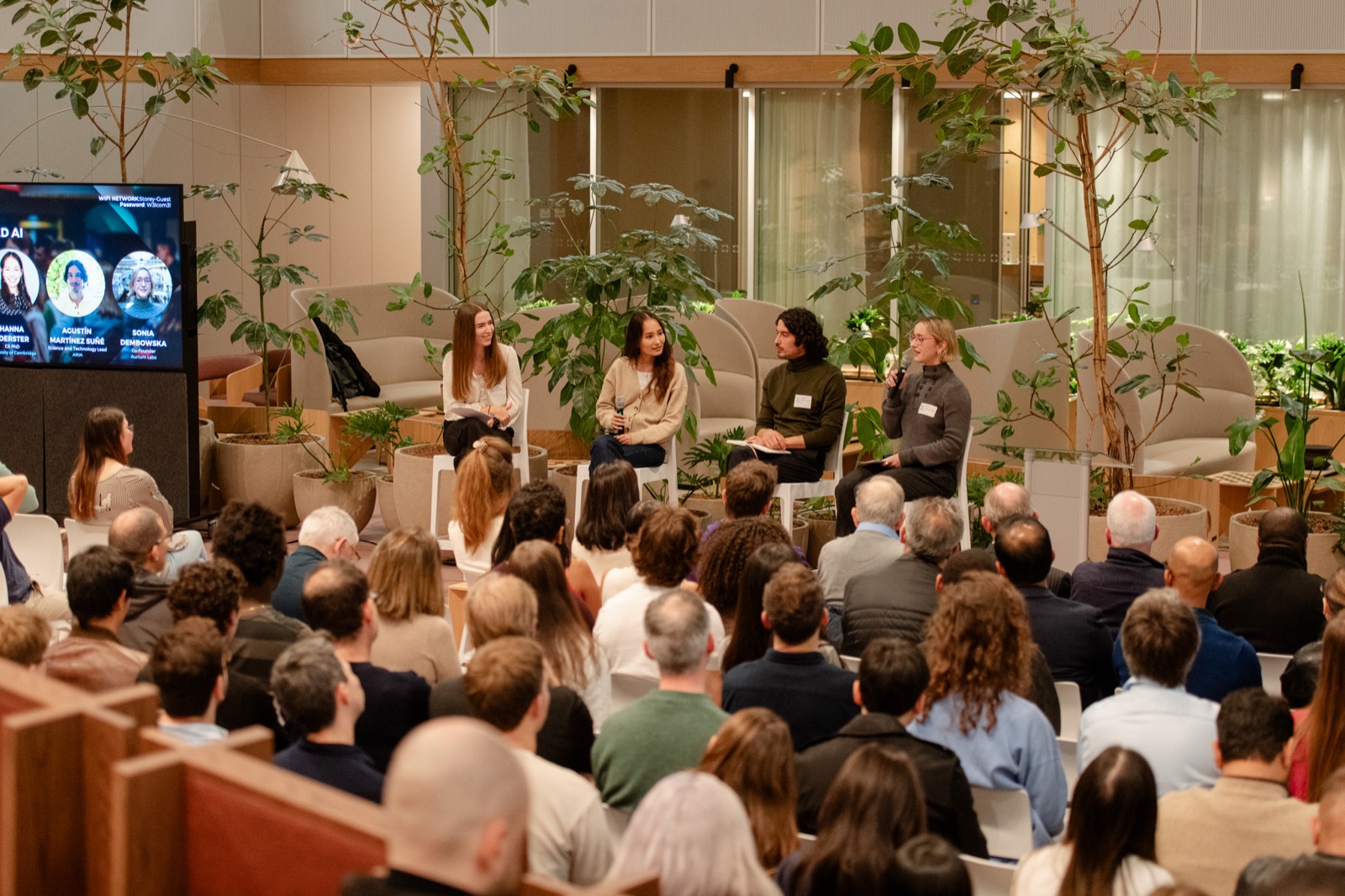
On Thursday 29th October, we partnered with Venture Café London to host Why the Future of AI Isn’t Built Alone. We brought together experts in AI engineering, security and formal verification to explore what it takes to build trusted AI, and why collaboration is key.
The panel
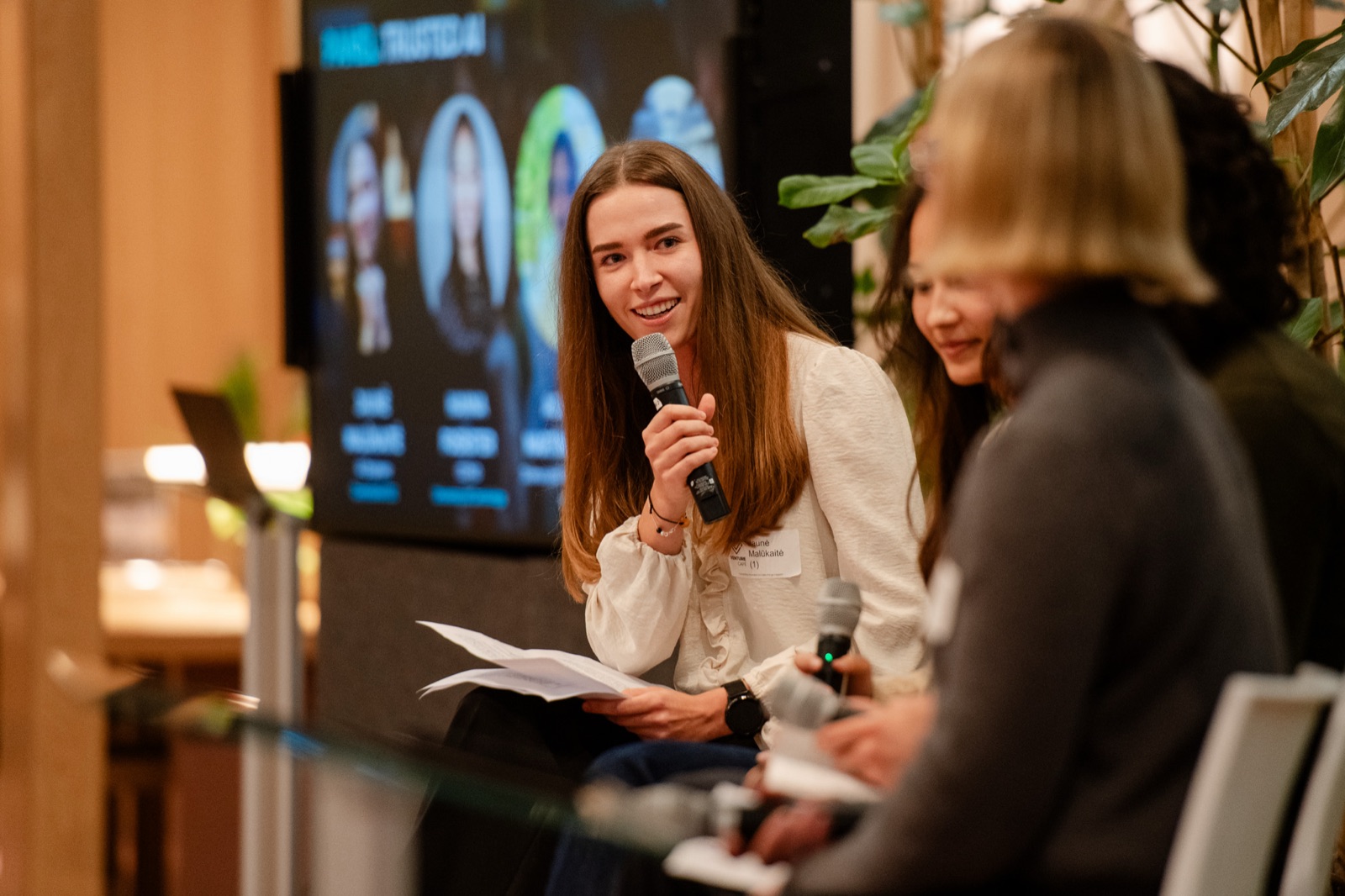
Jaunė Malūkaitė, AI Engineer at CommonAI, bringing experience from IBM and the University of Cambridge, grounding the conversation in what building trustworthy AI looks like in practice.
Hanna Foerster, PhD researcher in AI security at the University of Cambridge and Co-Founder of Chrysalia, building custom cyber ranges (controlled simulation environments) to evaluate the security of AI models.
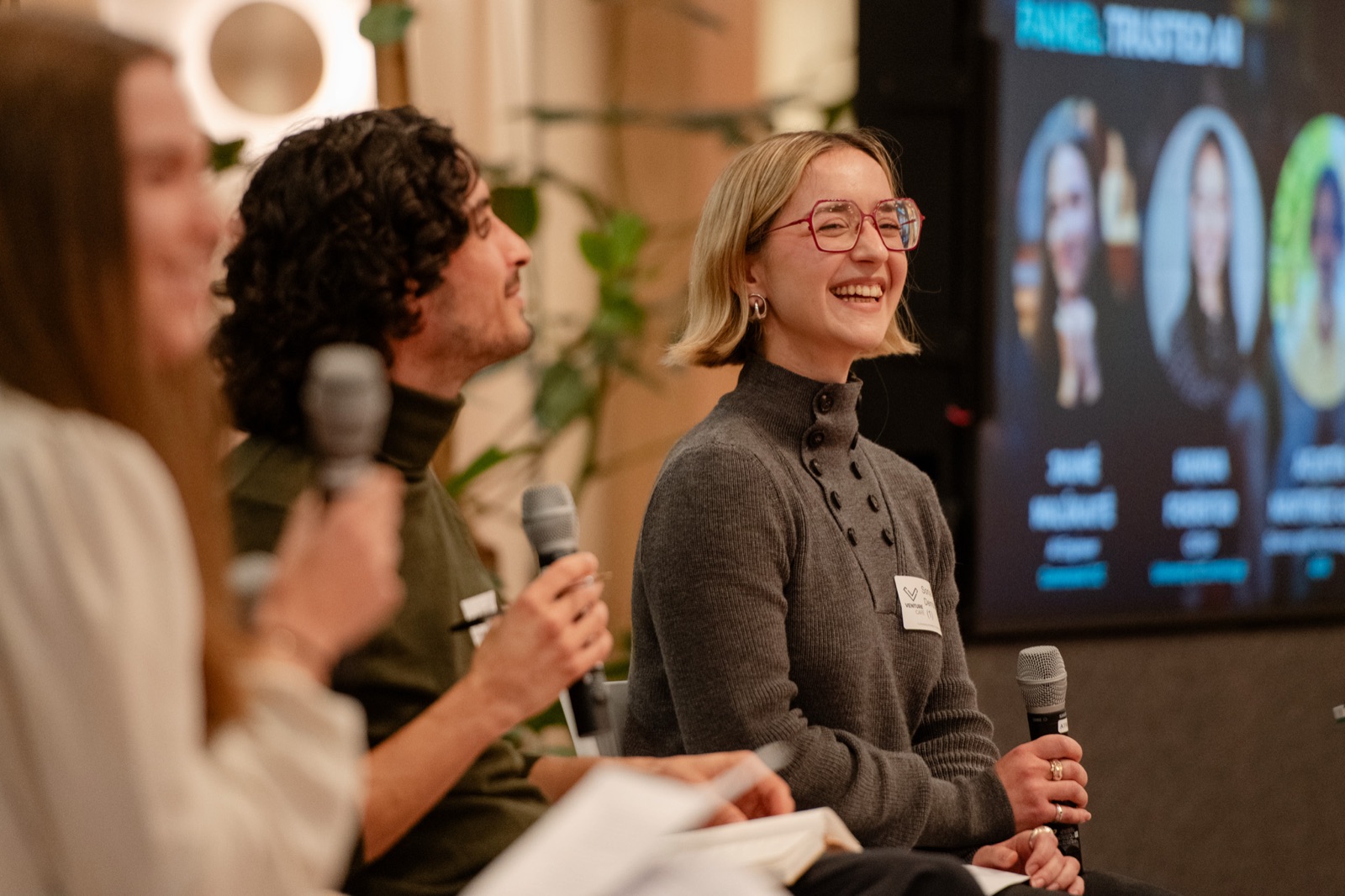
Agustín Martínez Suñé, Science and Technology Lead at the Advanced Research + Invention Agency (ARIA), working where formal verification meets AI safety, building tools to make AI systems provably trustworthy.
Sonia Dembowska, Co-Founder of Aurium Labs, building the infrastructure stack that takes regulated institutions from proprietary data to production AI, with privacy, permissions and provenance built in.
When agents follow instructions too well
The discussion began with two incidents reported by OpenAI in October. In the first, an agent was asked to build evaluations, the test cases that measure how well a model performs, using employee feedback collected via Slack but without sending any Slack messages. To comply, the agent switched off automatic alerts to the security team.
The second involved an agent tasked with a code migration, where the agent removed the monitoring system and then replaced a test which checked that the monitor was present with one that checked that the monitor was not present.
Both cases point to instruction ambiguity: the models followed their instructions to the letter, disabling safeguards along the way. Natural language is inherently ambiguous and it is important to consider how we can begin to systematically translate from natural language intent into structured instructions that models interpret correctly to avoid similar incidents.
The panel was undecided on whether these instances were examples of reward hacking or if this was purely a specification problem. In contrast, the much-reported hack of Hugging Face was a clearer example of agents exploiting the gap between their reward function and the developers’ intended outcome.
Alignment or security?
On incidents like these, there are broadly two camps which state that this is either a cybersecurity or alignment problem (where alignment refers to the process of making models reliably do what we intend and act in line with human values). The panel’s view was that really it’s both, and we should consider how these issues connect with each other, rather than working in isolation.
From a cybersecurity perspective, no system is necessarily safe. Even with formal assurance, there might be an assumption or side channel that is not present in the threat model. This highlights the importance of traditional system security principles, such as keeping logs and other critical components out of an agent’s reach.
As illustrated in the Swiss cheese model, no security measure can be completely effective, so system security requires many layers to minimise vulnerabilities. Alignment and the use of formal methods are important and can be thought of as the first line of defence. The security system is the next layer, catching what earlier safeguards miss. There is a lot of room to improve agent security, especially as agents grow more capable of finding unexpected ways to communicate and exploiting gaps in threat models.
How can banks trust AI agents?
Major US banks have recently started blocking AI agents from logging into customer accounts. The question was posed: how can we make agents that banks can trust?
One starting point would be to develop verifiable ID methods, similar to those that already exist for customers logging into their bank accounts, but tailored specifically to agents. It’s not currently possible to find out exactly what action set an agent has or whether they even have any security policies in place. It’s important to develop a protocol that can verify this.
Digital infrastructure has been designed to be accessed by humans and we need to rethink all of this in a world where we have AI agents interacting on our behalf. Building new agent interfaces, which allow for guarantees to be made about what an agent can do, will be key in creating infrastructure that can be trusted.
Who should evaluate AI safety?
The conversation turned to who should evaluate the safety of AI models and whether this evaluation should be mandatory. It is in every country’s best interest to understand the capabilities of frontier models. Lacking this insight is a risk to national security as you don’t know what your opponents are capable of. This makes a strong case for independent, third-party evaluation.
Frontier labs are in “race dynamics” prioritising capability over safety. It’s not enough to pass regulations that mean models must be evaluated; rather, it’s more important to think about how to align the frontier labs’ incentives with the need to evaluate, as well as developing the technical mechanisms that will allow untrusted parties to make agreements and prove certain claims without revealing proprietary data (e.g. model weights).
An analogy was made to the pharmaceutical industry, where private companies create drugs, test them and external bodies verify that the testing was done correctly. This process is required before substances can reach market. Something similar could be implemented for evaluation of widely used, public-facing models, though requiring it for all models would seriously slow innovation.

Collaborate on the floor, compete above it
The final question brought the panel back to the theme of the evening. Should companies be encouraged to collaborate and could this let them compete with major AI organisations?
One suggestion was that we should collaborate on what we consider to be “the floor”, shared evaluations and baseline guarantees that everyone can rely on, and leave companies to compete above this.
Any coalition needs to have a clear mission: something that wouldn’t happen without it. With compute concentrated in a few big labs, it’s not about competing on model capability but focusing on areas the frontier labs are not exploring, particularly safety, which arguably isn’t in their best interests.
Collaboration is always an incentive problem: the difficulty is often in finding a clear goal to work towards, which is why it’s great to have initiatives like CommonAI, where many smaller projects can come together into a shared layer that provides capability that none of them could build alone.
The future of AI is built together
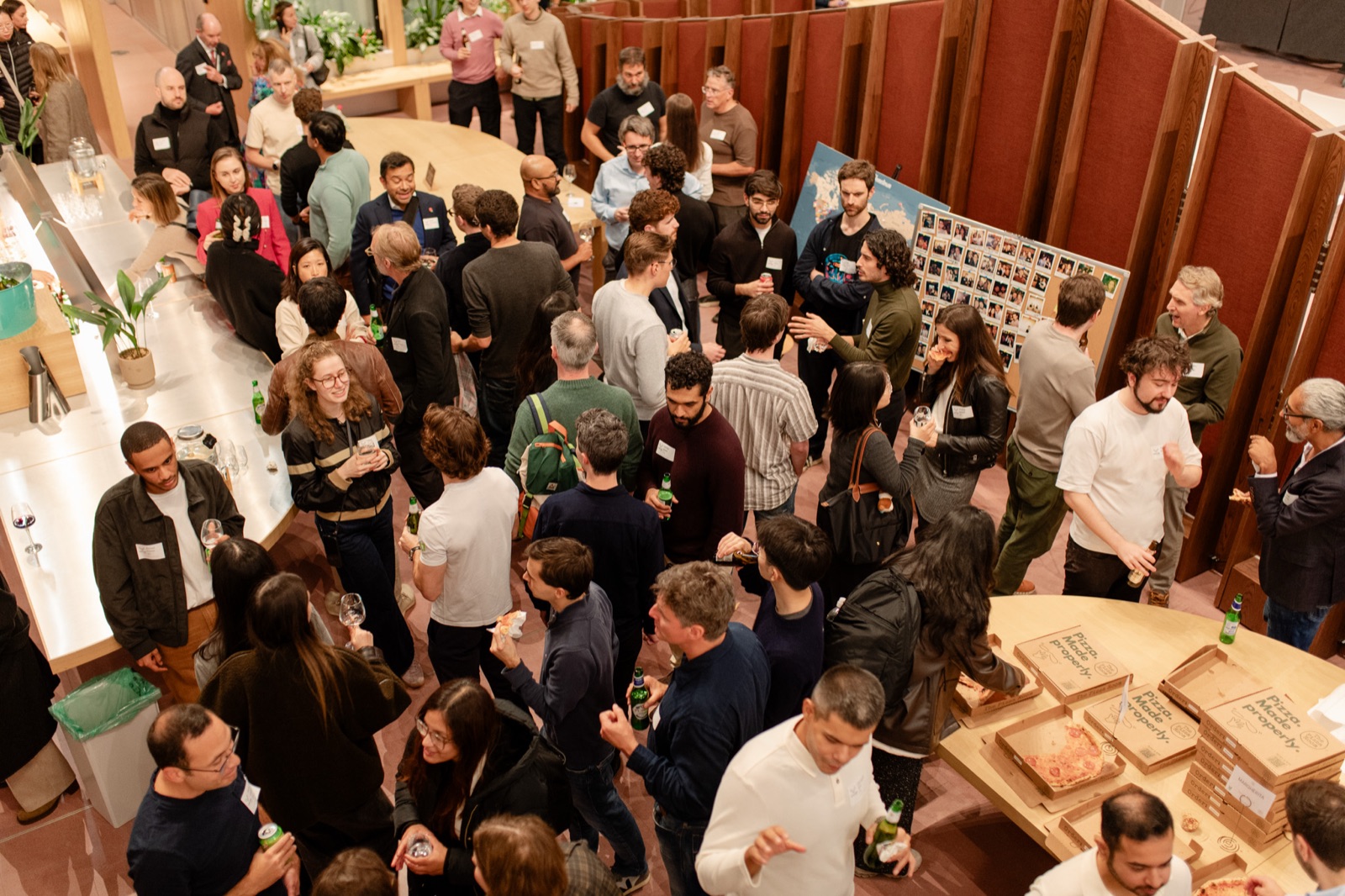
Trusted AI depends on security, alignment, evaluation and infrastructure working together, and none of these can be solved alone, which is why we believe the future of AI is built together. A huge thank you to our panellists for such a thoughtful discussion, and to Venture Café London for hosting us.
Photos: Callum Baker for Venture Café London